Curatorial Approach
Curatorial Statement
I work with history the way some artists work with pigment — not as a fixed ground, but as a substance that can still be moved. The geography I return to most often is the Middle East, West Asia and North Africa: a region that has never been merely a place on a map. It is a dense accumulation of successive civilizations, sacred texts, trade routes, oil economies, colonial interruptions and unfinished modernities. Here the past does not stay behind us. It presses forward through architecture, pattern, and the residual force of images that refuse to become purely decorative. To curate contemporary art from within this density is to accept that every work arrives already carrying multiple, sometimes contradictory, temporalities.
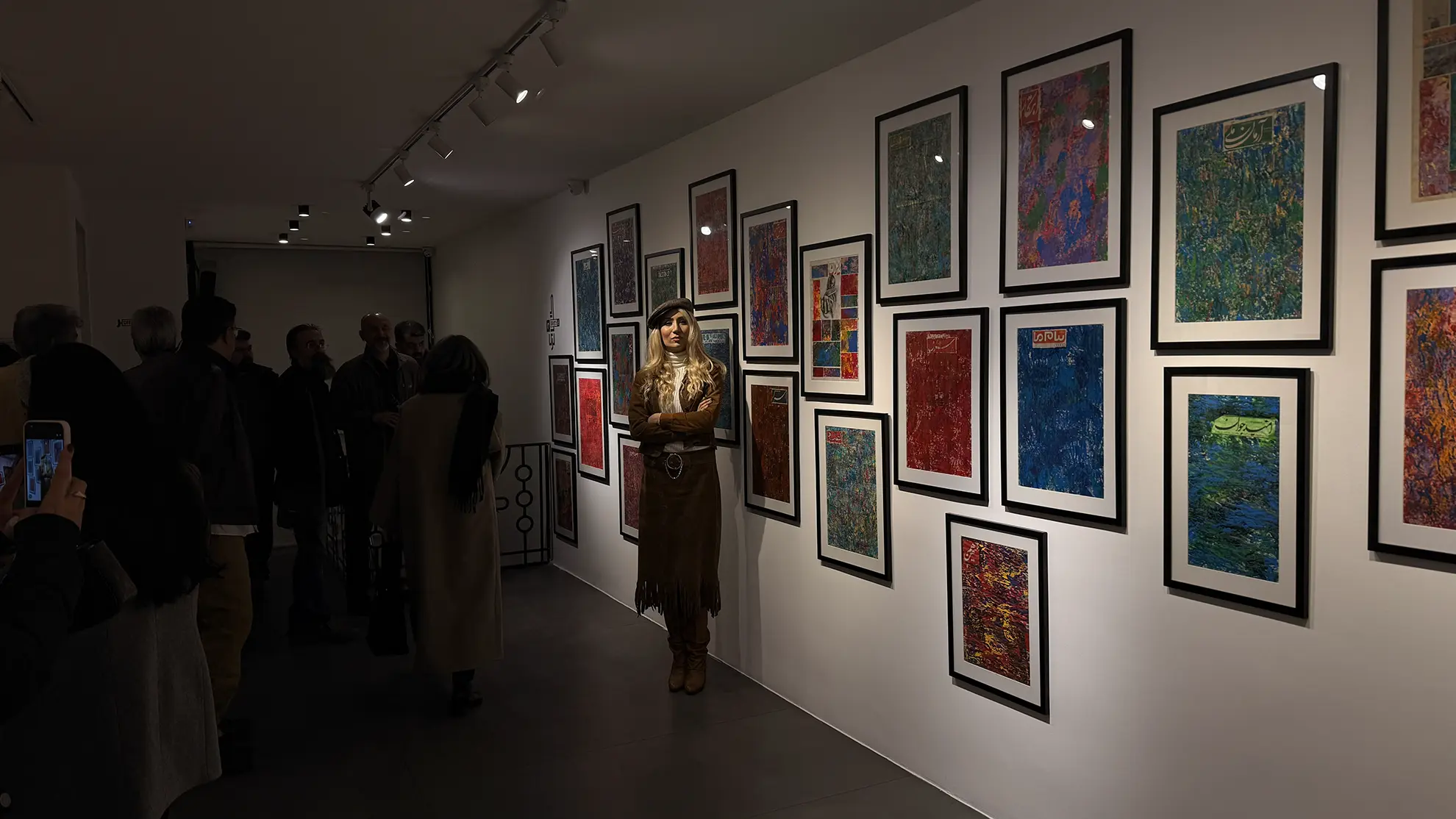
My practice begins where those temporalities can be made audible again through the specific languages of contemporary art. I am less interested in illustrating history than in allowing it to be rethreaded by painting, installation, and the quiet persistence of material that still remembers. A newspaper page from a silenced publication, a carpet motif that once functioned as a second flag, a photographic archive overwritten by official narrative — these become matter for what I call para-fictional curation. The method neither invents freely nor simply documents. It places the documented and the imagined inside the same artistic frame, creating a slight but decisive shift in how a story can be seen. Contemporary art, in this sense, is not a neutral container; it is the active site where inherited narratives can be interrupted, thickened, or set in motion once more.
The Museum as a Machine of Legitimacy
This approach grows from research into the museum as a machine of legitimacy — how institutions select, frame and naturalize certain narratives while allowing others to fade. That inquiry shapes the way I construct exhibitions and collections. I look for works of contemporary art that do not merely represent a culture or a trauma, but that actively negotiate the terms of visibility: what is allowed to surface, what remains half-buried, what can speak across languages and borders without being reduced to them.
A Temporary World
Every project is treated as the construction of a temporary world. Whether in a museum gallery, a fair booth, or the longer arc of a private collection, works are chosen for the conversations they open with one another and with the historical matter they carry. Coherence is not imposed; it is discovered through sustained attention to material, to silence, and to the political weather in which images circulate.
A Form of Stewardship
I do not curate toward resolution. The most vital collections and exhibitions of contemporary art remain slightly unfinished — open enough for future readings, rigorous enough to resist easy consumption. In a region where history is continually rewritten by power, the quiet act of keeping certain narratives alive inside the forms of contemporary art becomes its own form of stewardship.